Step into the world of industrial strength and precision with the Cranes and Hoists space, where each grouping is not just a type of equipment, but a gateway into specific industries and real world applications. These tools are not abstract machinery, they are deeply tied to how construction sites rise, how factories move, and how heavy work gets done every single day.
At the center, Cranes & Hoists lift solutions serve as the all purpose backbone across multiple industries. You will see these used in construction, manufacturing, automotive repair, and warehousing, where lifting engines, steel beams, pallets, or machinery is part of daily operations. Whether it is raising materials on a job site or repositioning equipment inside a plant, this segment reflects the broadest range of real world use, making it essential for anyone working with heavy loads.
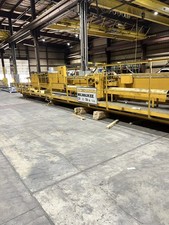
Moving into large scale operations, Bridge Cranes are built for industries that demand constant, high capacity lifting across wide areas. These are commonly found in steel mills, automotive assembly plants, shipbuilding yards, and large distribution centers. Imagine entire vehicle frames being moved along a production line or massive steel components traveling across a factory floor. These systems are designed for repetitive, heavy duty workflows where efficiency and reliability are critical.
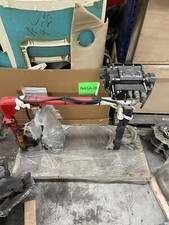
For more accessible lifting, Chain Hoists are widely used in workshops, maintenance facilities, and assembly operations. They shine in environments like small manufacturing shops, repair garages, and equipment installation projects where loads need to be lifted vertically with precision but without massive infrastructure. You might see one lifting a car engine in a garage or positioning parts along an assembly bench.
When flexibility and positioning matter most, Lever Hoists step in. These are heavily used in construction, rigging, mining, and field service work where operators need to pull, align, or secure loads from different angles. A typical example would be aligning structural beams on a construction site or tensioning equipment in tight, hard to reach areas. Their portability makes them a favorite for on site crews who cannot rely on fixed systems.
For heavier and faster lifting demands, Rope Hoists are the go to in industries like steel fabrication, shipyards, foundries, and large scale manufacturing. These environments require moving extremely heavy loads quickly and smoothly, such as lifting molten metal containers, large machinery, or bulk materials. Their strength and speed make them ideal for high production environments where downtime is not an option.
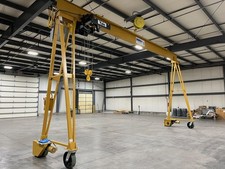
Blending movement and lifting, Hoist Cranes are commonly used in logistics hubs, warehouses, and production lines where loads need to be lifted and repositioned in multiple directions. These systems support workflows like loading trucks, transferring goods between stations, or feeding materials into processing lines. They are especially valuable in operations that require both reach and precision within a compact space.
For localized, efficient lifting, Jib Cranes and Boom Cranes are widely used in manufacturing cells, workshops, marine environments, and even chemical plants. You will often find them mounted near workstations where repetitive lifting happens, such as moving parts between benches or loading materials into machines. They are also common in ports and yacht harbors, where controlled, short range lifting is needed without taking up floor space.
Finally, Other Cranes & Hoists represents the niche and specialized side of the industry. This is where unique applications come into play, including explosion proof hoists for oil and gas facilities, custom lifting systems for aerospace, or tailored solutions for food processing and pharmaceutical environments. These tools are built for very specific conditions, where standard equipment simply would not meet safety or performance requirements.
What ties all of this together is how each segment maps directly to real industries and real work. This is not just equipment, it is infrastructure for productivity. From a mechanic lifting an engine to a shipyard moving massive steel sections, every piece plays a role in keeping industries moving forward.
Last Update: April 2026